Beyond the Brick: How to Fabricate a Commercial Monument Sign That Survives 50 Years
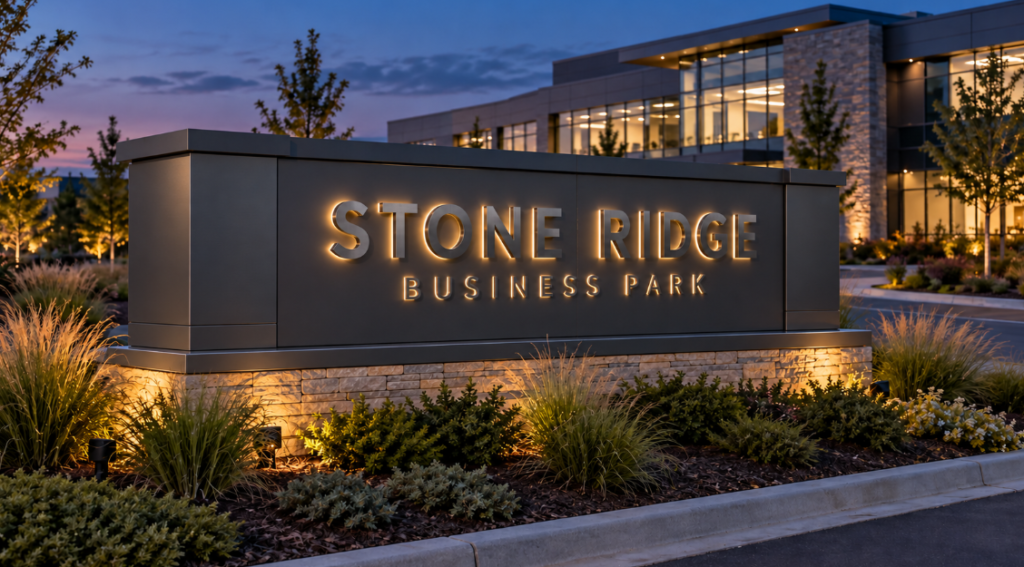
To a driver passing by at 45 miles per hour, a monument sign looks like a permanent piece of the earth.
They see a solid structure rising from the landscape, proudly bearing a corporate logo that anchors the property. It looks heavy, immovable, and eternal.
Here is the fabrication reality: That solid-looking monument is actually a masterclass in lightweight engineering.
Underneath that clean, painted finish is a hollow, meticulously engineered structural framework designed to withstand hurricane-force wind loads while housing low-voltage power supplies and precision LED arrays.
Unlike heavy steel that eventually rusts and stains architectural facades, or heavy masonry that requires massive concrete foundations, modern sign shops rely almost exclusively on high-strength alloys for superior longevity and weather resistance.
Whether you are an aspiring shop fabricator or a project manager overseeing high-end corporate branding, here is the exact step-by-step breakdown of how a professional shop builds a commercial monument sign from the ground up.
🧱 Interactive Monument Anatomy Inspector
Click a structural layer below to inspect how an all-aluminum commercial monument sign is engineered from the ground up:
Step 1: The Concrete Footing & Anchor Cage
Before any metal is cut, a reinforced concrete footer is poured into the earth. Heavy-duty stainless steel or galvanized threaded anchor bolts (or a pre-welded anchor cage) are cast directly into the wet concrete to match the sign’s internal structural footprint.
Engineering the Skeleton: Where Art Meets Structural Math
You cannot build a commercial monument sign by guessing.
Because monument signs stand at ground level exposed to high-velocity ground winds, vehicles, and weather, municipal building departments require engineered structural drawings (PE stamps) before issuing a permit.
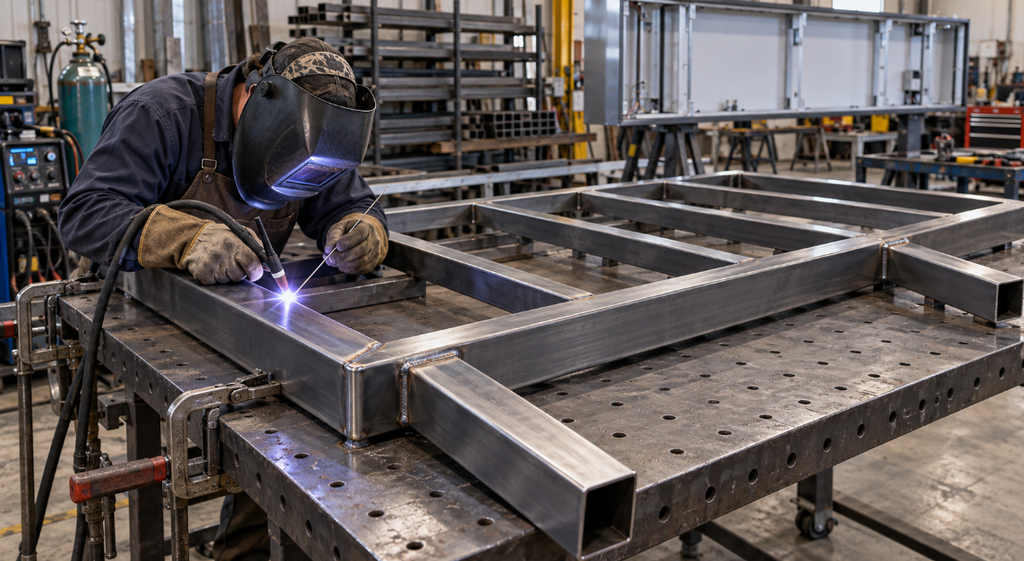
- The Internal Cage: Fabricators weld structural tubing together to form the main chassis.
- Zero Rust Risk: Unlike steel framing, which can condensate and rust from the inside out over decades, non ferrous tubing requires zero anti rust primer coats and won’t degrade from moisture trapped inside the cabinet.
- Conduit Pathways: While welding the skeleton, fabricators integrate internal routing channels and clips so electricians can run primary low voltage and high voltage power lines cleanly.
Wrapping the Frame: Precision Exterior Cladding
The aesthetic success of a monument sign depends entirely on its exterior skin.
While composite panels or stucco have their place, professional sign builders rely heavily on heavy-gauge sheet metal (.090″ or .125″ thickness) for the exterior enclosure.
Why Metal Skins Outperform Alternatives:
- Seamless Thermal Expansion: Because both the internal structural skeleton and the exterior skins share the same expansion rate, the entire assembly expands and contracts uniformly under extreme weather. This prevents buckling, warping, or popped rivets.
- Brake Formed Precision: Sheet metal can be precision braked to create sharp 90 degree corners, custom reveals, and radius curves that give corporate monuments a high end, monolithic appearance.
- Superior Paint Adhesion: When properly prepped, etched, and finished with automotive grade polyurethane paint, metal skins maintain a pristine, factory fresh finish for decades without chalking or fading.
Illumination Masterclass: Push Through Acrylics vs. Halo Glow
When the sun goes down, illumination transforms a monument sign from a static block into a 24-hour beacon.
- Push Through Letters: CNC routers cut exact letter shapes out of the metal cabinet face. Thick acrylic letters (often 1/2 inch to 1 inch thick) are pushed through the face from behind, creating a vibrant, dimensional glow that pops off the sign surface.
- Halo Illumination (Reverse Lit): The main cabinet face remains solid and opaque, while individual metal letters stand off from the face. LEDs bounce backward off the cladding, creating a soft, elegant halo of light around every character.
Final Assembly & Site Delivery
Once the internal wiring is complete and burn-in tested in the shop, the monument is loaded onto a flatbed trailer.
Because modern metal construction keeps total sign weight remarkably low, site installation is fast and efficient: a crane hoists the hollow base directly over the pre cast concrete anchor bolt cage.
Installers level the structure using stainless steel shims, tighten down the anchor nuts, and seal the base plate to prevent ground moisture from entering the cabinet.
A final wipe down of the exterior panels, and the sign is ready for its grand opening.
Comments (0)
No comments yet. Be the first to comment.